Complete Opening Coordination Protects Project Certainty
A commercial opening is a coordinated assembly, not three independent purchases. The hollow metal frame, door leaf, architectural hardware, fire-rating requirements, access-control components and installation details must work together at the opening level. When they do not, the issue often appears after tender, when schedules are being reviewed, frames are being installed or electrified hardware is ready for commissioning.
For Ontario ICI and public-sector projects, predictable procurement depends on more than receiving separate product deliveries. General Contractors, Construction Managers, consultants and institutional owners need coordinated information that supports installation, inspection and closeout. We help project teams across Ontario coordinate commercial doors, hollow metal frames, commercial wood doors, architectural hardware and related Division 10 specialties as complete opening packages.
Separate Awards Create Unowned Opening Conditions
When doors, frames and hardware are awarded to different suppliers, accountability can become unclear. Each scope may appear complete on its own, yet no one may be responsible for confirming that all components work together before fabrication. The gap can extend beyond Division 8, involving the electrical contractor, security integrator and installation team.
We often see coordination questions arise around details such as:
- Frame reinforcements that do not match closers, locks, exit devices or electrified hardware
- Strike preparations that do not suit the selected lock or access-control arrangement
- Hinge, pivot or door coordinator locations that conflict with the hardware schedule
- Door thicknesses, clearances, glazing or louvre requirements that affect the frame and hardware
- Field modifications with no clearly assigned responsibility
A door schedule is important, but it does not always describe every condition needed to complete an opening. Hardware sets, handing, wall construction, fire ratings, glazing, thresholds, gasketing and security devices can all change what the frame and door require.
The commercial impact can be significant. Unresolved conditions can lead to RFIs, revised shop drawings, supplemental pricing, delayed frame releases, site rework and disputes over correction costs. On schools, hospitals, municipal facilities and multi-phase ICI work, these issues can also affect openings tied to occupancy, security and life-safety milestones.
Opening Compatibility Requires One Coordinated Review
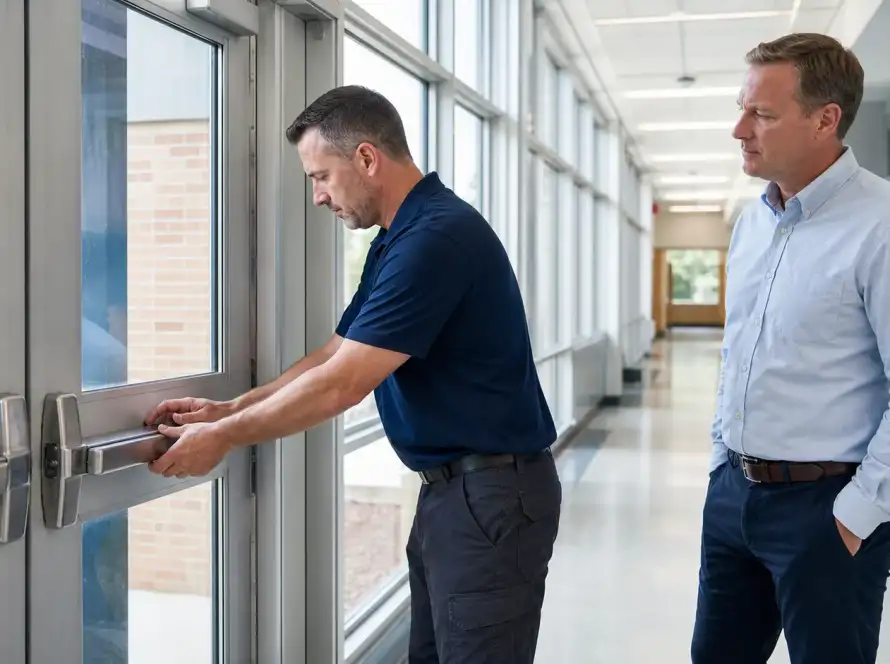
A coordinated opening review examines the door schedule, frame schedule, hardware sets, specifications, fire-rating requirements, wall types and electrical or security requirements together. The purpose is straightforward: identify conflicts before materials are released for fabrication and procurement.
Rather than reviewing separate manufacturer documents in isolation, we recommend that project teams assess each opening as a complete system. That gives consultants a clearer view of how the specified components relate to one another and allows RFIs to be raised while changes are still manageable.
A useful opening review should confirm:
- Door material, construction, thickness, handing and required clearances
- Frame profile, gauge, wall condition, anchorage and reinforcement needs
- Rating and label requirements for doors, frames, glazing, louvres and hardware
- Preparation for hinges, closers, locks, panic hardware and door coordinators
- Thresholds, weatherstripping, gasketing, access-control devices and power-transfer requirements
Clear submittal responsibility helps keep this process organized. When related information is presented as a complete package, project teams can review the opening before separate decisions create an installation conflict. This is particularly useful for long-lead hollow metal, fire-rated and electrified components, where late changes can disrupt planned release dates.
Commercial Door Frame and Hardware Packages Improve Procurement
Commercial door frame and hardware packages are a procurement strategy, not simply a matter of convenience. A coordinated package provides one accountable source for the major Division 8 components required to complete an opening. That can make tender comparisons, purchase order scopes, submittal tracking and delivery planning easier to manage.
Material timing is a major reason to coordinate early. Hollow metal frames may need to be released ahead of wall construction, while doors, architectural hardware and electrified components can follow different manufacturing timelines. By reviewing these dependencies together, we can help establish practical release priorities that suit the construction sequence.
Late summer is often an important planning period for Ontario project teams preparing for fall mobilization, interior framing and year-end procurement. A Division 8 review completed before frames are needed on site can help avoid delayed releases, expedited freight decisions and winter installation disruptions. The same planning approach supports projects at any time of year: identify the opening conditions first, then align procurement with the site schedule.
Fire, Access and Electrified Openings Need Early Alignment
Fire-rated openings require careful coordination because they are intended to perform as tested and labelled assemblies. Door, frame, hardware, glazing, louvres, gasketing and field modifications may all affect the intended opening performance. We recommend reviewing applicable project specifications, listings, ratings and consultant requirements before fabrication and installation decisions are finalized.
Accessibility and day-to-day operation also deserve early attention. Hardware selection, lever operation, opening force, clearances, thresholds, manoeuvring space and automatic operators can affect the opening’s intended use. Addressing these requirements during submittal and hardware-schedule review is more effective than discovering them after installation.
Electrified and security-sensitive openings add another layer of coordination. Card access, electrified strikes, electric locks, request-to-exit devices, door-position switches, power transfers and automatic operators may require preparations in both the door and frame. Alignment among the Division 8 supplier, electrical contractor, security integrator and consultant team helps identify those requirements before hollow metal fabrication begins.
Build a Coordinated Package Before Tender Close
Separate door, frame and hardware purchases can seem simple at tender stage, but they can transfer opening coordination risk to the General Contractor, Construction Manager or owner later. Before awarding Division 8 work, review door schedules, hardware sets, specifications, fire-rating requirements, electrified-opening details and anticipated release dates as one procurement package.
The practical goal is to assign responsibility for the complete opening, not just the individual components. When each opening is reviewed before fabrication, teams are better positioned to manage submittals, protect installation sequencing and reduce avoidable site corrections.
Coordinate Openings With Greater Confidence
Ontario Commercial Doors supports project teams with coordinated Division 8 procurement, submittal review and specification-driven opening solutions. For support with commercial door frame and hardware packages, involve our team early to align door schedules, hardware sets, fire-rating requirements and lead times. We help contractors, consultants and owners procure complete opening packages suited to the demands of ICI and public-sector construction.