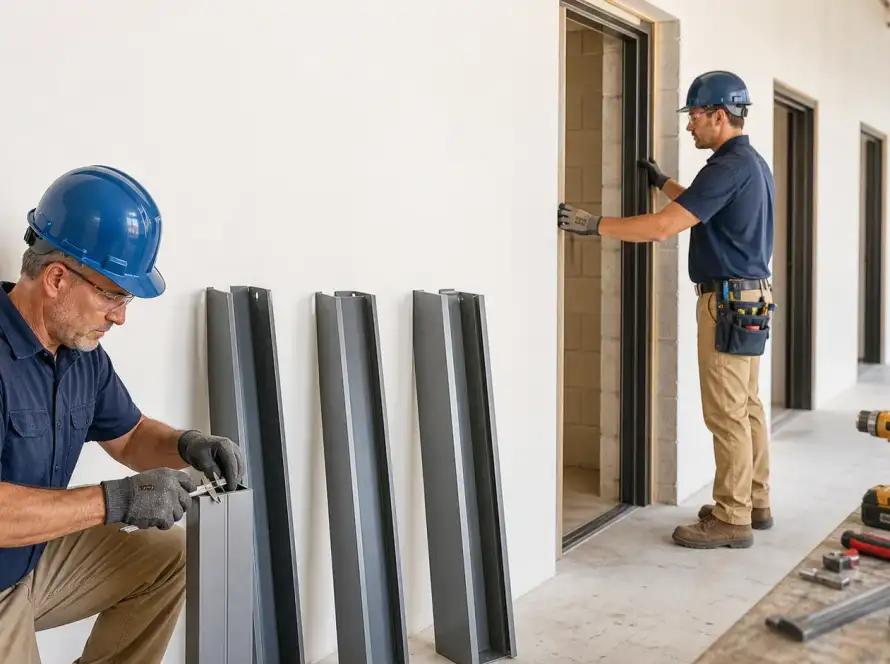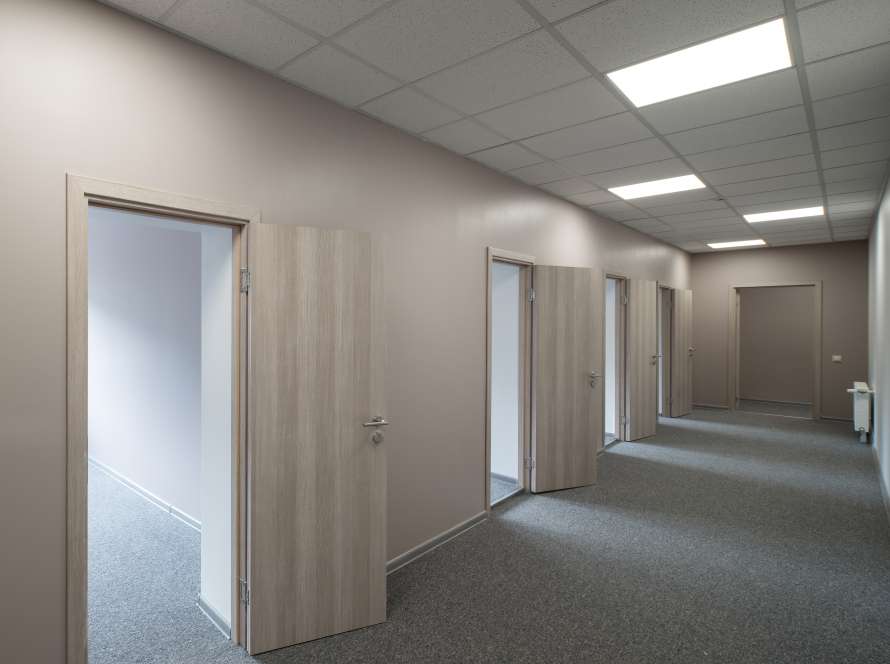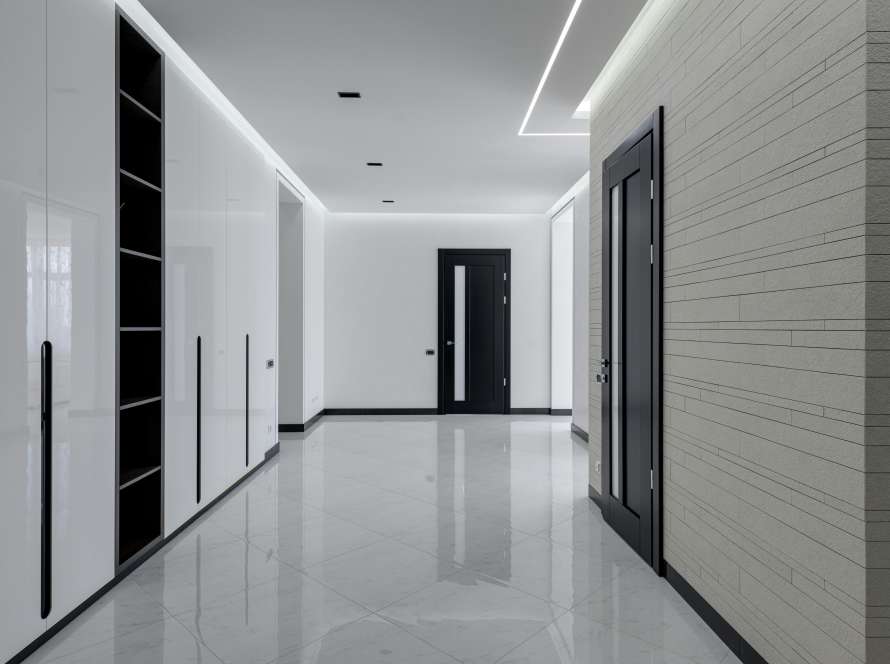
Commercial door hardware determines how an opening performs long after construction is complete. It affects security, accessibility, life safety, durability, traffic flow and day-to-day control. For ICI and public-sector work, hardware is not a finishing item. It is a coordinated Division 8 component that must match the door, frame, fire rating, occupancy and intended use.
At Ontario Commercial Doors, we work with General Contractors, Construction Managers, architects, consultants, estimators and public-sector teams across Ontario to coordinate doors, frames and architectural door hardware as complete opening packages. A well-developed hardware schedule helps prevent gaps between specifications, security requirements, electrified hardware and installation sequencing.
Start with the Opening Function and Risk Profile
Every hardware set should begin with a simple question: what must this opening do each day? A classroom door, office entrance, stairwell door, electrical room, washroom, mechanical room or public entrance may all look similar on a floor plan, but their operating needs can be very different.
Before finalizing a hardware set, we recommend confirming:
- Expected traffic volume and frequency of use
- Required security, privacy and access-control level
- Fire-rating and life-safety requirements
- Barrier-free operation and clearance needs
- Cleaning, durability and future electrification requirements
A school corridor opening may need durable hardware that stands up to frequent use and controlled access. A healthcare space may require privacy functions, easy operation and coordinated automatic opening. Meanwhile, a mechanical room may need restricted access, durable locking and a hardware arrangement suited to the room’s function.
Door and frame construction also affect the hardware solution. Hollow metal doors and frames, commercial wood doors, fire-rated assemblies and specialty openings each have different preparation, reinforcement and mounting considerations. Applying one general hardware group across several opening types can create conflicts later, especially when door handing, frame details or security needs differ from the original assumption.
Architectural Door Hardware Sets Define Opening Performance
A hardware set is the coordinated group of products assigned to one opening or a group of matching openings. It provides the instructions needed to procure, prepare and install the opening properly. Rather than selecting individual products in isolation, we coordinate each item with the door schedule, frame details, handing, swing, mounting conditions and project specifications.
A typical architectural door hardware set may include:
- Hinges or pivots, locks, latches and cylinders
- Exit devices, pulls, push plates and door stops
- Door closers, automatic operators and control devices
- Kick plates, edge guards and other protection hardware
- Thresholds, weatherstripping, seals and access-control components
The hardware schedule needs to work with the physical opening. For example, a door closer requires proper mounting conditions, while an electrified lock may require frame preparation, power transfer details and coordination with other trades. Hardware preparation can affect hollow metal doors, commercial wood doors, frames and rated openings before products arrive on site.
During tender and submittal review, we look for inconsistencies between drawings, specifications, door schedules, hardware groups and security narratives. This review can identify unclear handing, missing hardware items, conflicting locking functions or incomplete electrified opening details before procurement is underway. Complete commercial opening packages help bring doors, frames and hardware into one coordinated scope rather than leaving responsibility divided between separate suppliers and trades.
Coordinate Fire Ratings, Accessibility and Electrified Hardware
Fire-rated openings should be treated as tested and coordinated assemblies. The door, frame and hardware must work together with the project requirements. Hinges, closers, latching devices, exit devices, seals and door coordinators can all affect how a rated opening is specified and installed.
Accessibility must also be addressed at the opening level. Hardware selections may need to support accessible operation through lever handles, appropriate opening force, clearance planning, door operators and coordinated control devices. On commercial and public-sector projects, these details should be resolved in the hardware schedule rather than treated as field adjustments.
Electrified hardware requires early coordination. Depending on the opening, the design may include electric strikes, electrified locks, card access, power transfers, door position switches, request-to-exit devices or automatic operators. Each component can involve preparation, wiring, conduit, power and control requirements.
When these items are not coordinated early, project teams may face missing frame preparation, unclear wiring responsibility or delayed security integration. We recommend bringing the hardware supplier, electrical contractor, security consultant, low-voltage trades and General Contractor into the discussion before doors and frames are released for production. Early review supports clearer submittals, shop drawings and installation planning.
Coordinate Architectural Door Hardware Before Tender
Architectural door hardware should be reviewed before tender close, particularly for institutional, healthcare, education, municipal and public works projects. Tender documents often contain information across several locations, including door schedules, floor plans, specifications, security documents and electrical drawings. A complete review helps confirm that these documents are pointing to the same opening requirements.
Common tender-stage concerns include hardware assigned to another trade, incomplete electrified hardware details, uncertain installation responsibility, missing frame preparation and unconfirmed access-control scope. Long-lead items can also affect the procurement plan when specialty hardware, exit devices, door operators, electronic access components or custom finishes are involved.
Late summer is a practical time to review schedules for fall tendering, school board work, municipal upgrades, year-end capital projects and winter construction planning. Before purchase orders are released, project teams should confirm lead times, hardware finishes, opening quantities and the status of outstanding RFIs. This helps avoid releasing doors and frames before the hardware requirements are fully understood.
Clear tender coordination also supports more accurate scope division. When the hardware schedule identifies which party supplies, installs, wires, adjusts and commissions each component, the project team has a stronger basis for procurement and site coordination.
Strengthen Your Division 8 Package Before Procurement
Reliable commercial openings depend on coordinated doors, frames and hardware, not isolated product selections. A complete Division 8 package gives project teams a clearer view of how each opening must be prepared, supplied and installed. It also supports safer operation, better durability, accessibility, security and more predictable procurement.
Before moving ahead, confirm that every opening has a defined function, compatible door and frame construction, a complete hardware set and clear responsibility for electrified components. Reviewing those details before procurement is far easier than resolving them after materials are in production or installation is underway.
Coordinate Hardware Packages With Confidence
Ontario Commercial Doors supports ICI teams with coordinated architectural door hardware packages aligned with project specifications, door schedules and opening requirements. We help streamline submittal review, hardware coordination and procurement planning across complete Division 8 packages. Bring our team in early to identify suitable products, manage lead-time considerations and support a more efficient path from tender to installation.